The Magic of Tidying App

The Magic of Tidying App

A Companion App for the Marie Kondo's 'Magic of Tidying'

The Magic of Tidying was a worldwide phenomon that opened many minds to finding joy through de-cluttering. The success of the book can be attributed to the the wealth of ideas and driving philosophy. What do we add in creating the companion app for the book? We must confront a number of questions to do so: Is there way to create a product that complements the experience of the book that is not redundant? Is there a way to address the greater issue of motivation? Is there a way to capture the“magic” and “joy”of tidying in a way that is engaging, useful, and fun to use?
Role

Research UX Design UI Design

Tools

Figma, Notion, Photoshop, Illustrator, In Design

Timeline

60 Hrs

This requirements of the project are unique because the lessons are the core experience. This can provide the structure and answer a lot of the design decisions. If that is the case how can the app be a utility that is not redundant to the book and what can the app do that the book cannot? What will make this a joyful entity unto itself?

Background

The Magic of Tidying Book is a guide in itself. Is there a way to make an app for the life-changing magic of tidying up that is engaging, useful, and fun to use? 

Problem

Motivation is a huge issue with regard to cleaning, decluttering, and organizing. Surveys and interviews backed this thesis citing lack of time, ambition, and even social pressure as reasons to keep users' mess.


Goals

Motivate users to even begin to the process of tidying.


Determining the design principles of the project that will serve to guide the design process. The design must be:


Simple

Fun 

Joyful & Magical
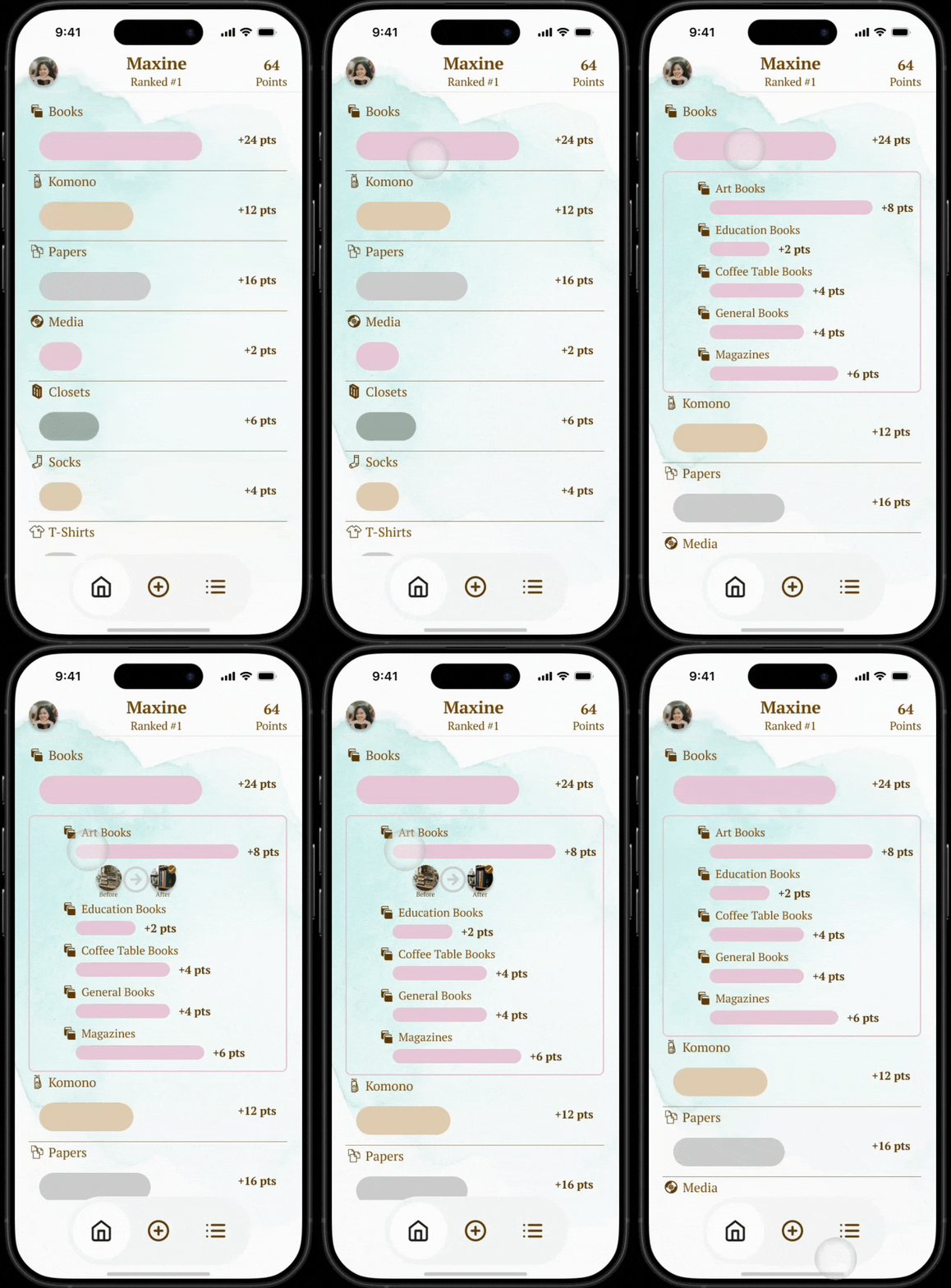
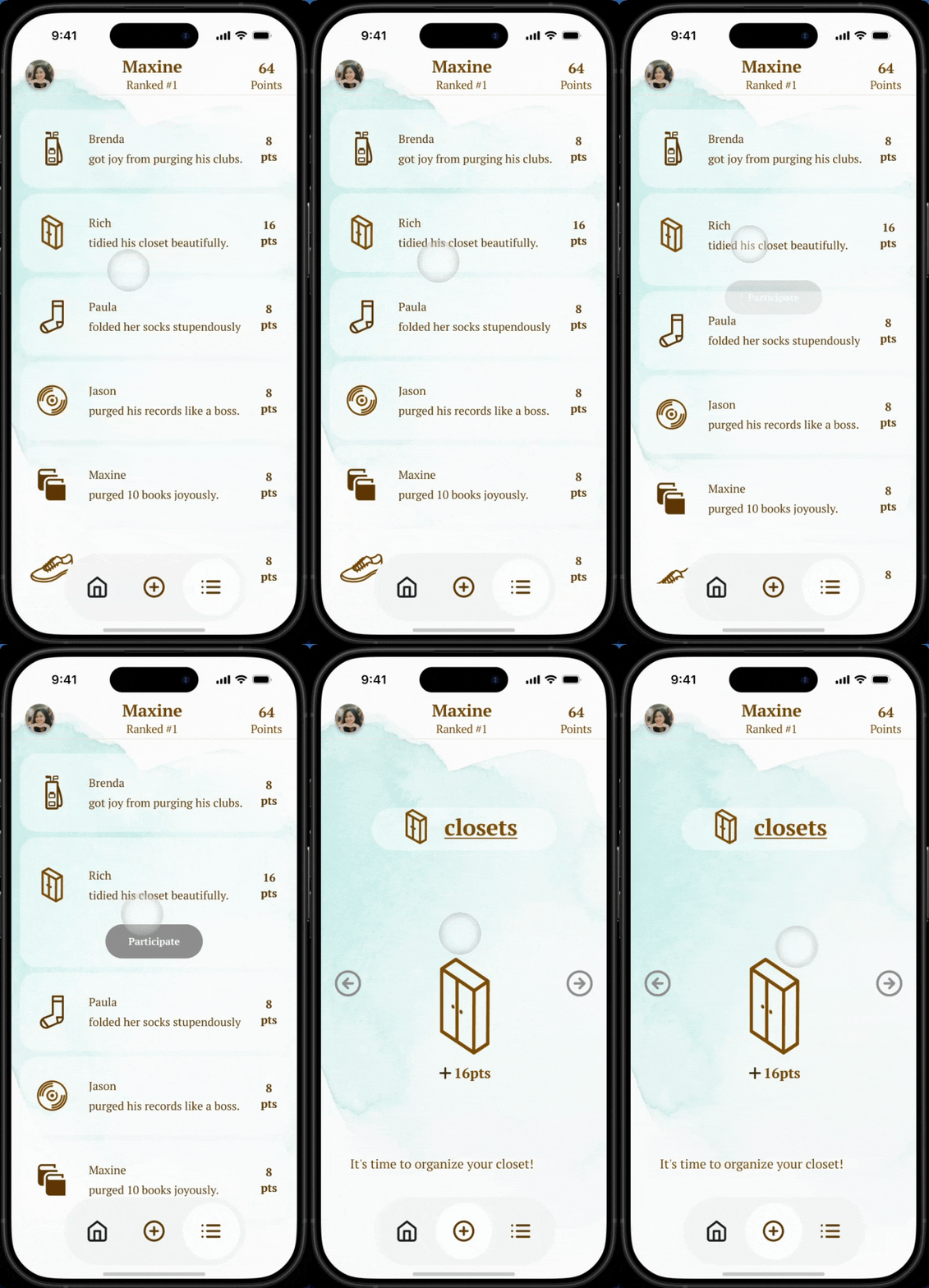
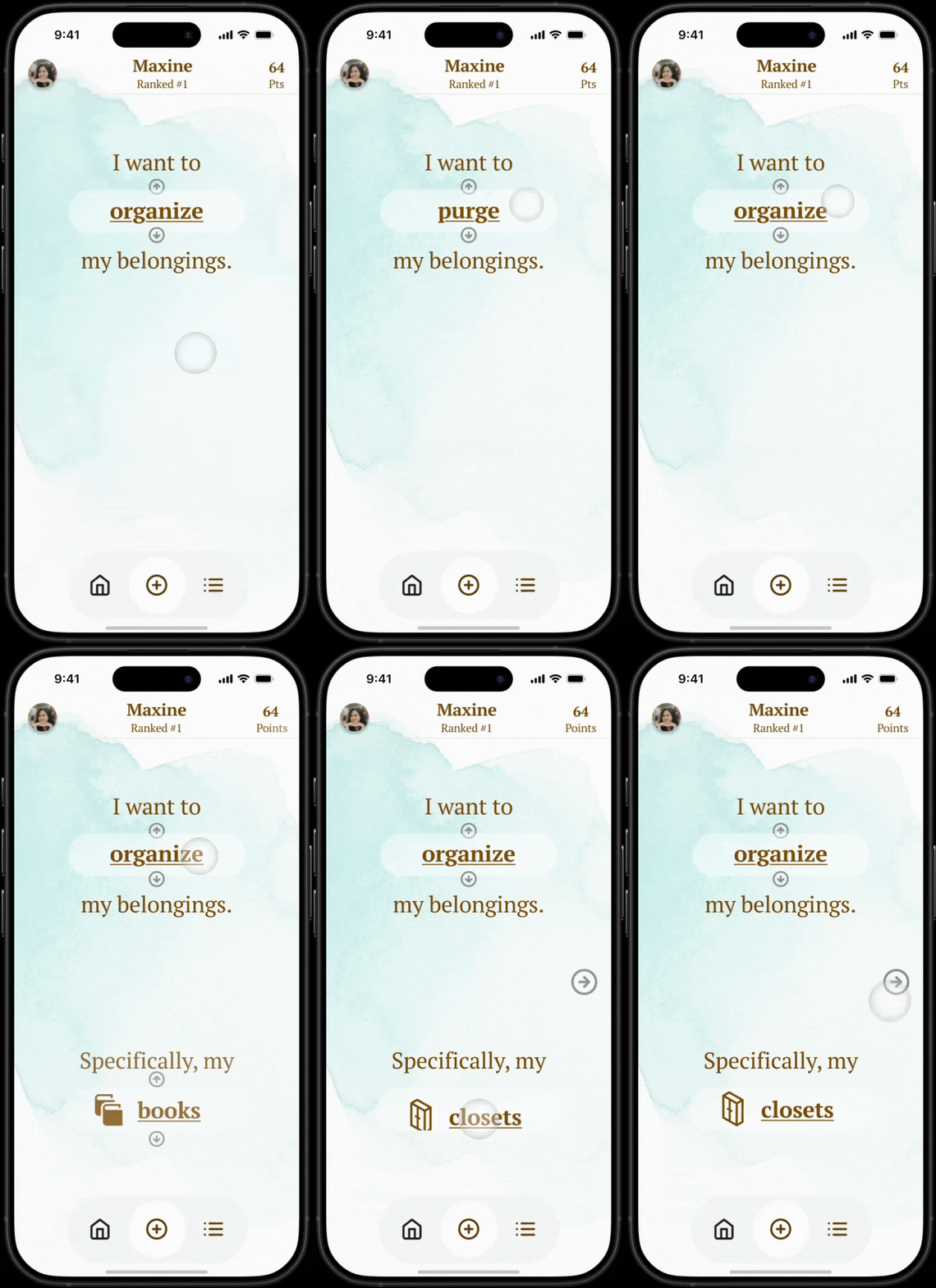
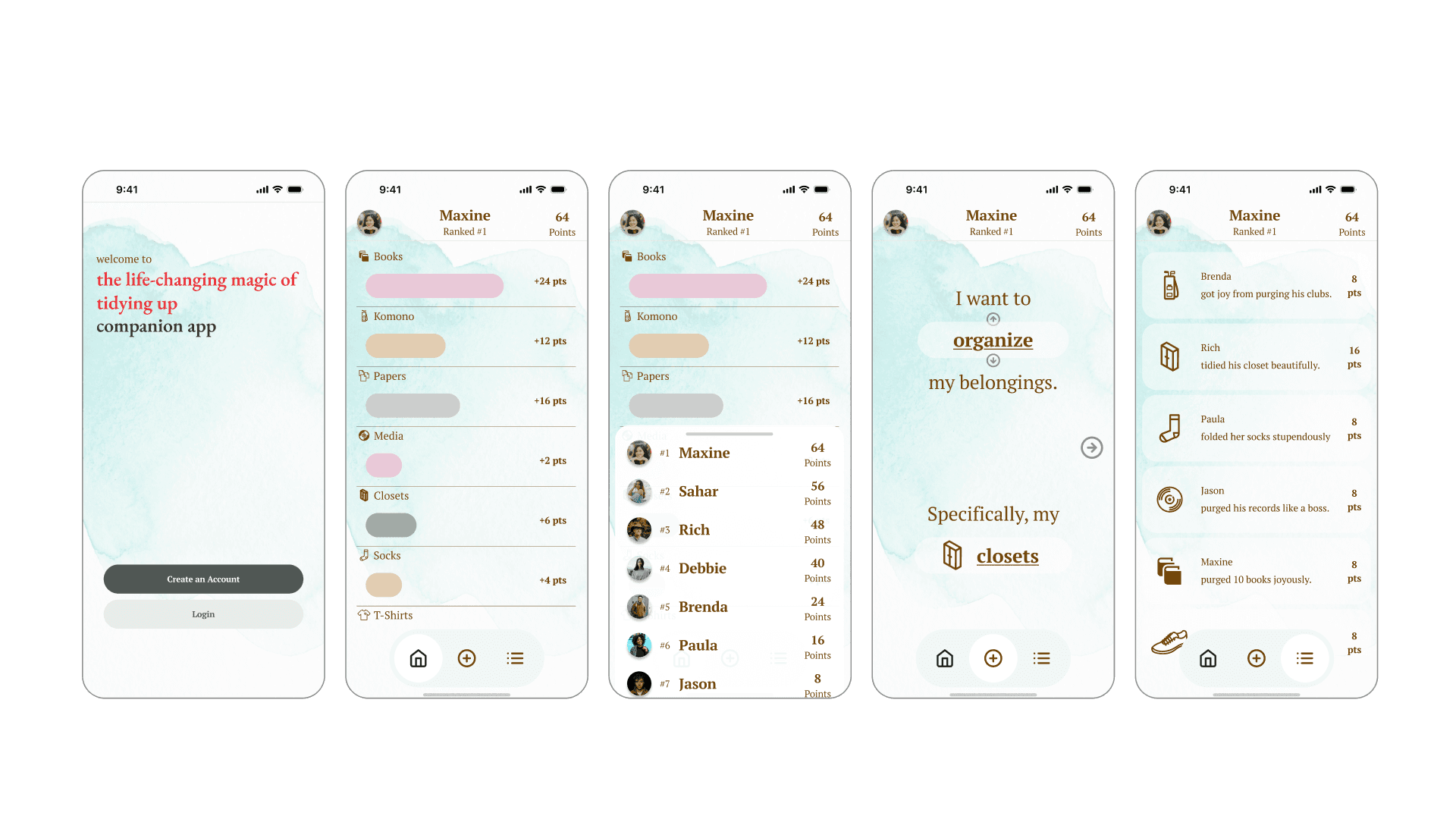
The design of the app captures the philosophy of the book creating joy through simplicity. Simultaneously, we addressed motivation and inspiration by creating a friendly environment to share progress and encourage engagement. Ultimately, according to the research, accountability was the antidote to apathy toward tidiness.

The design of the app captures the philosophy of the book creating joy through simplicity. Simultaneously, we addressed motivation and inspiration by creating a friendly environment to share progress and encourage engagement. Ultimately, according to the research, accountability was the antidote to apathy toward tidiness.

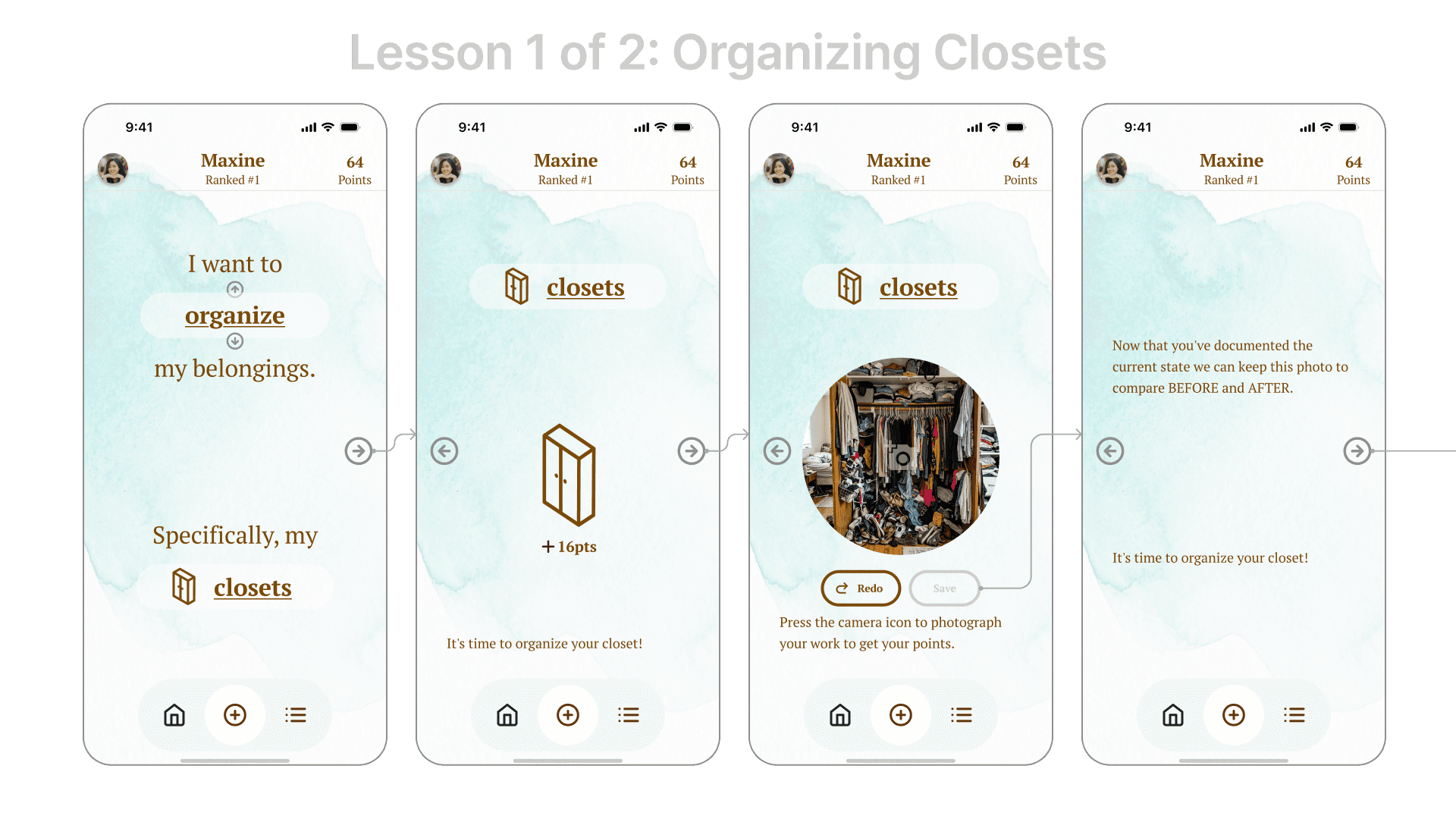
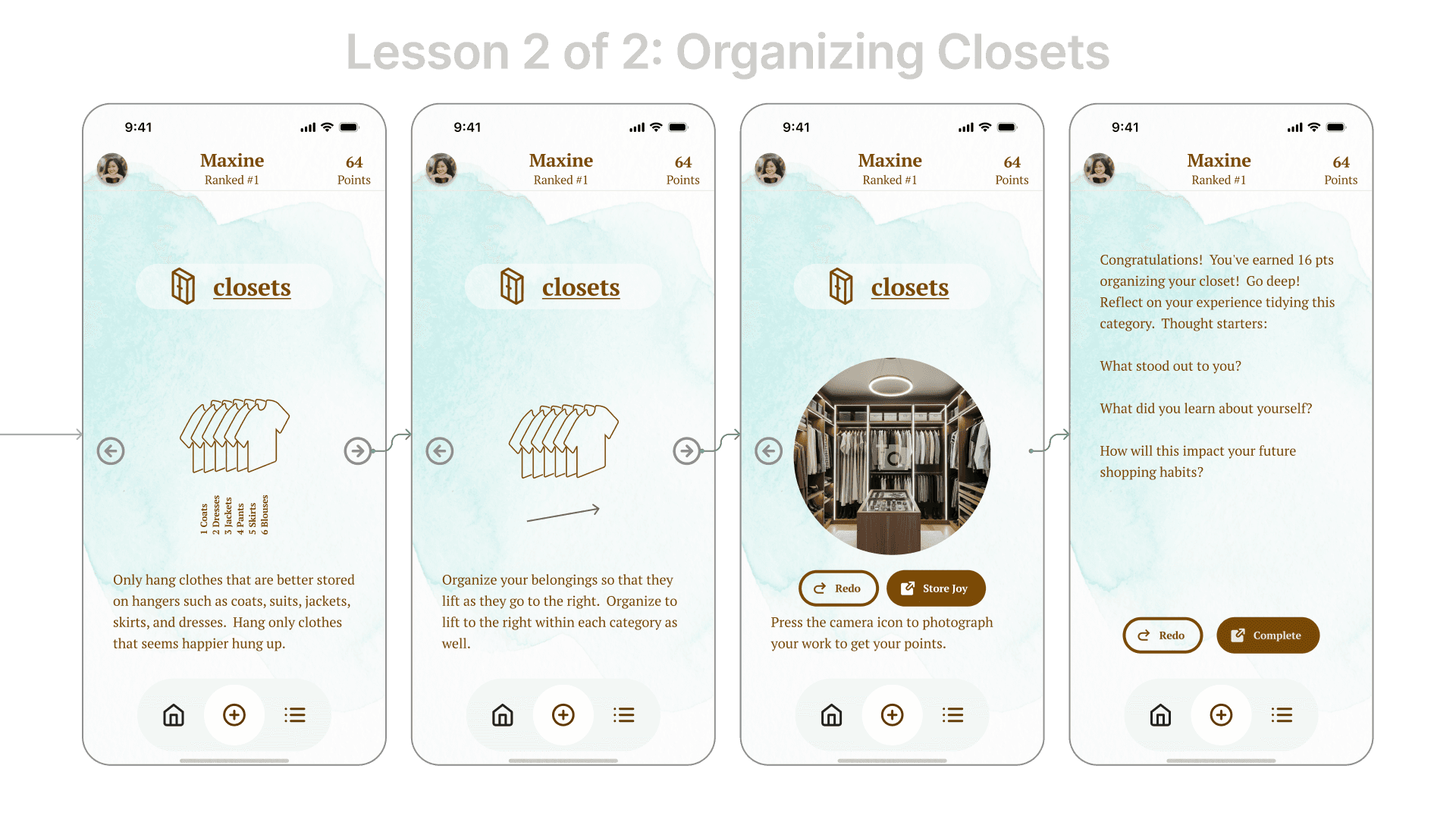
create simple interactive lesson guides

create a sytem to log and record progress

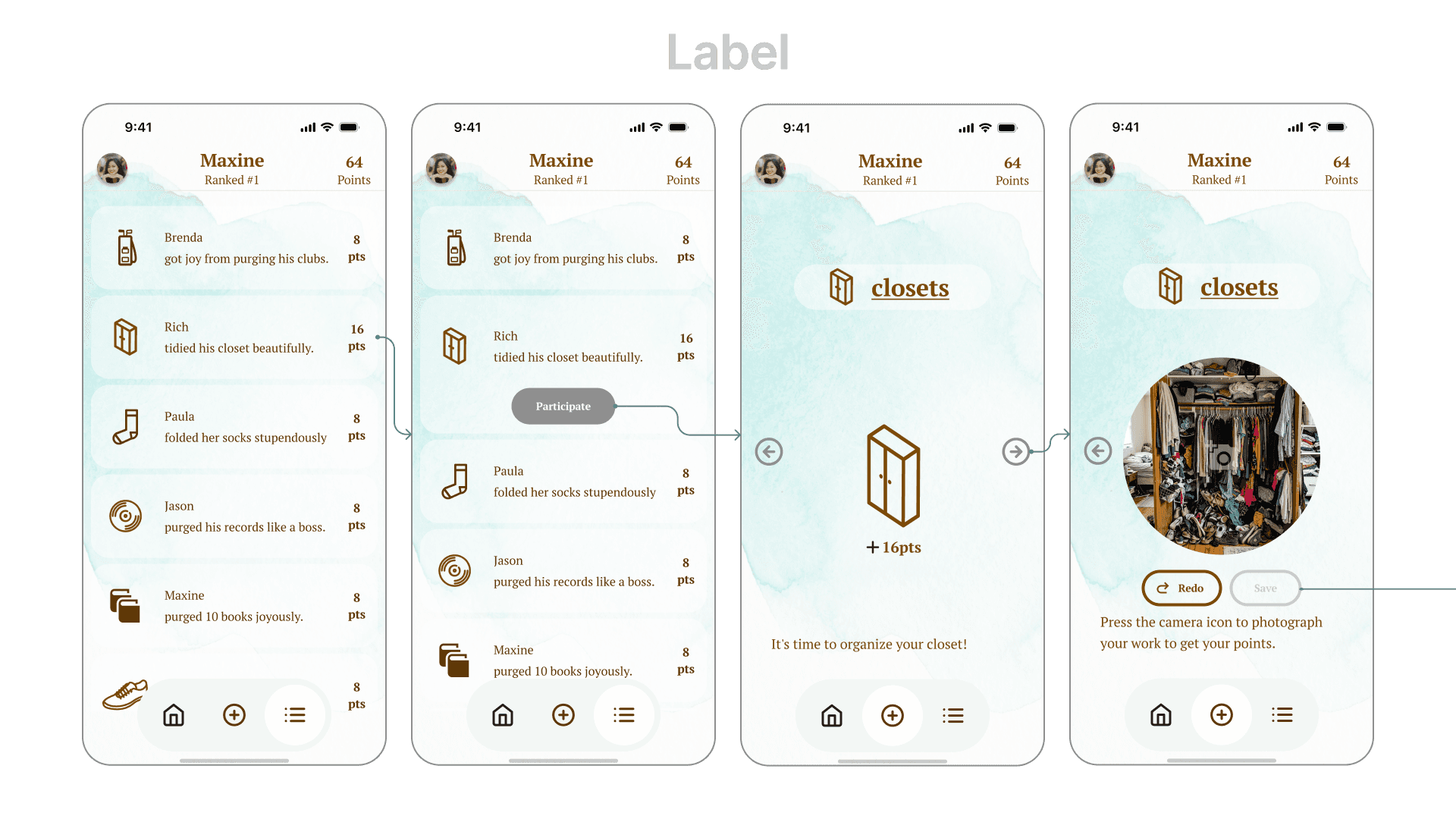
create a means to share and see progress with friends to encourage progress

create a metrics and rankings to motivate the community

create simple interactive lesson guides

create a sytem to log and record progress

create a means to share and see progress with friends to encourage progress

create a metrics and rankings to motivate the community

create simple interactive lesson guides

create a sytem to log and record progress

create a means to share and see progress with friends to encourage progress

create a metrics and rankings to motivate the community

Discover

Summary of Research

Finding: People are Busy 

Free time is extremely limited when it comes to tidying & organizing

Sometime it’s hard to care.

Some people just don’t care to clean.  

Motivation is an issue. 


Finding: Motivations & How to Inspire

When people do tidy and organize they find it the very satisfying - they relish in the results of the labor and find joy in that moment 

Self improvement is a major motivator.

Games and apps that involve rewards, collecting, and earning feedback are addictive/fun and could provide a framework around which to design.


Finding: Accountability Counts


People found motivation to tidy & organize when they anticipate guests or when someone else has to suffer as a result of their mess. 

Incorporating a social network could help encourage tidiness by recognizing this sentiment. 

“I never have guests over and don’t have a girlfriend so I never clean”

User Interviews

I conducted one-on-one interviews with potential users to understand their needs, behaviors, and pain points (approximately 4-5 interviews lasting 30-45 minutes)

Surveys

I created a short survey for a broader swath of people to fill out

Competitive Assessment

I explored similar products and audit their pluses and minuses

Discover

Summary of Research

Finding: People are Busy 

Free time is extremely limited when it comes to tidying & organizing

Sometime it’s hard to care.

Some people just don’t care to clean.  

Motivation is an issue. 


Finding: Motivations & How to Inspire

When people do tidy and organize they find it the very satisfying - they relish in the results of the labor and find joy in that moment 

Self improvement is a major motivator.

Games and apps that involve rewards, collecting, and earning feedback are addictive/fun and could provide a framework around which to design.


Finding: Accountability Counts


People found motivation to tidy & organize when they anticipate guests or when someone else has to suffer as a result of their mess. 

Incorporating a social network could help encourage tidiness by recognizing this sentiment. 

“I never have guests over and don’t have a girlfriend so I never clean”

User Interviews

I conducted one-on-one interviews with potential users to understand their needs, behaviors, and pain points (approximately 4-5 interviews lasting 30-45 minutes)

Surveys

I created a short survey for a broader swath of people to fill out

Competitive Assessment

I explored similar products and audit their pluses and minuses

Define

Define

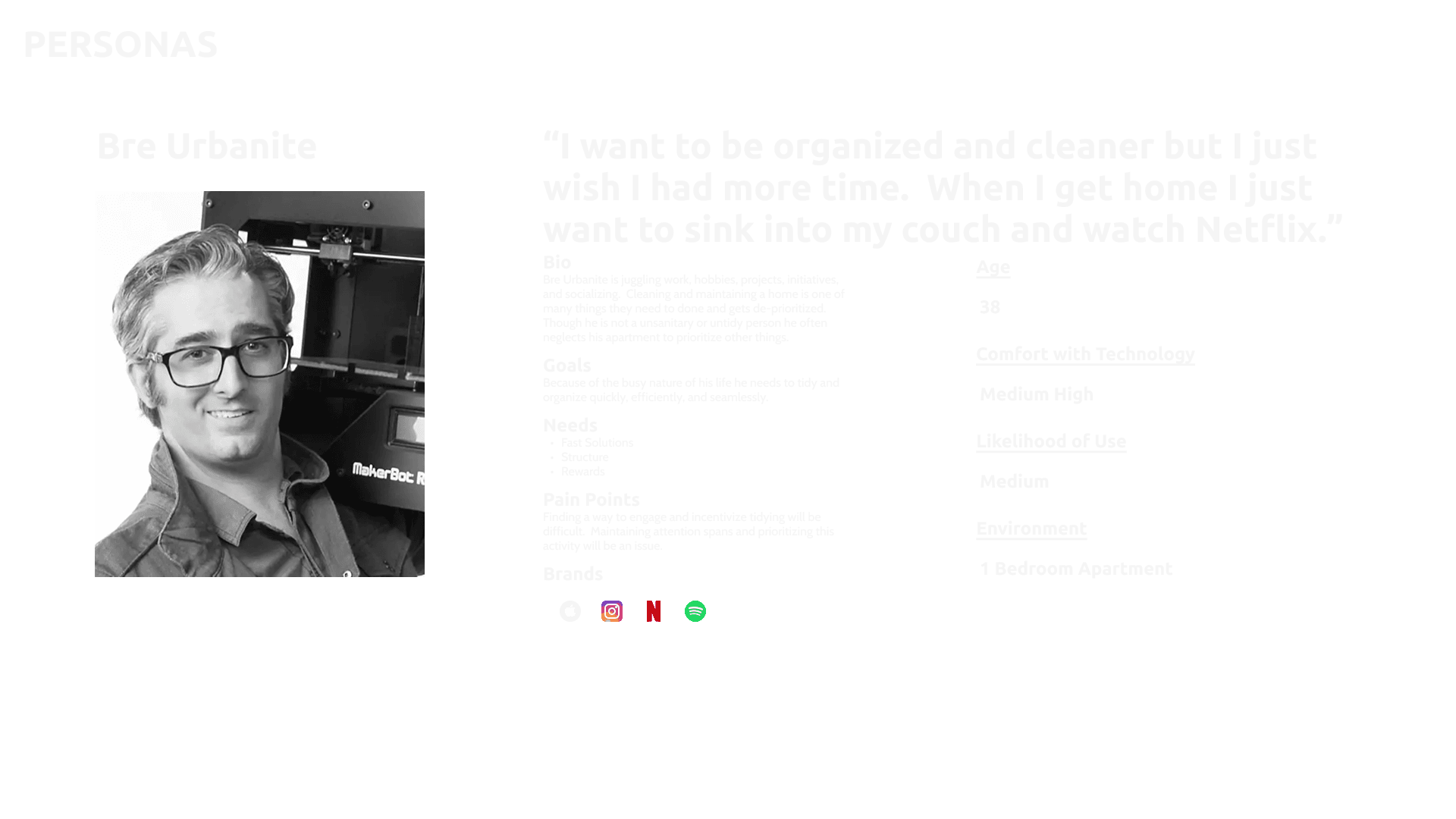
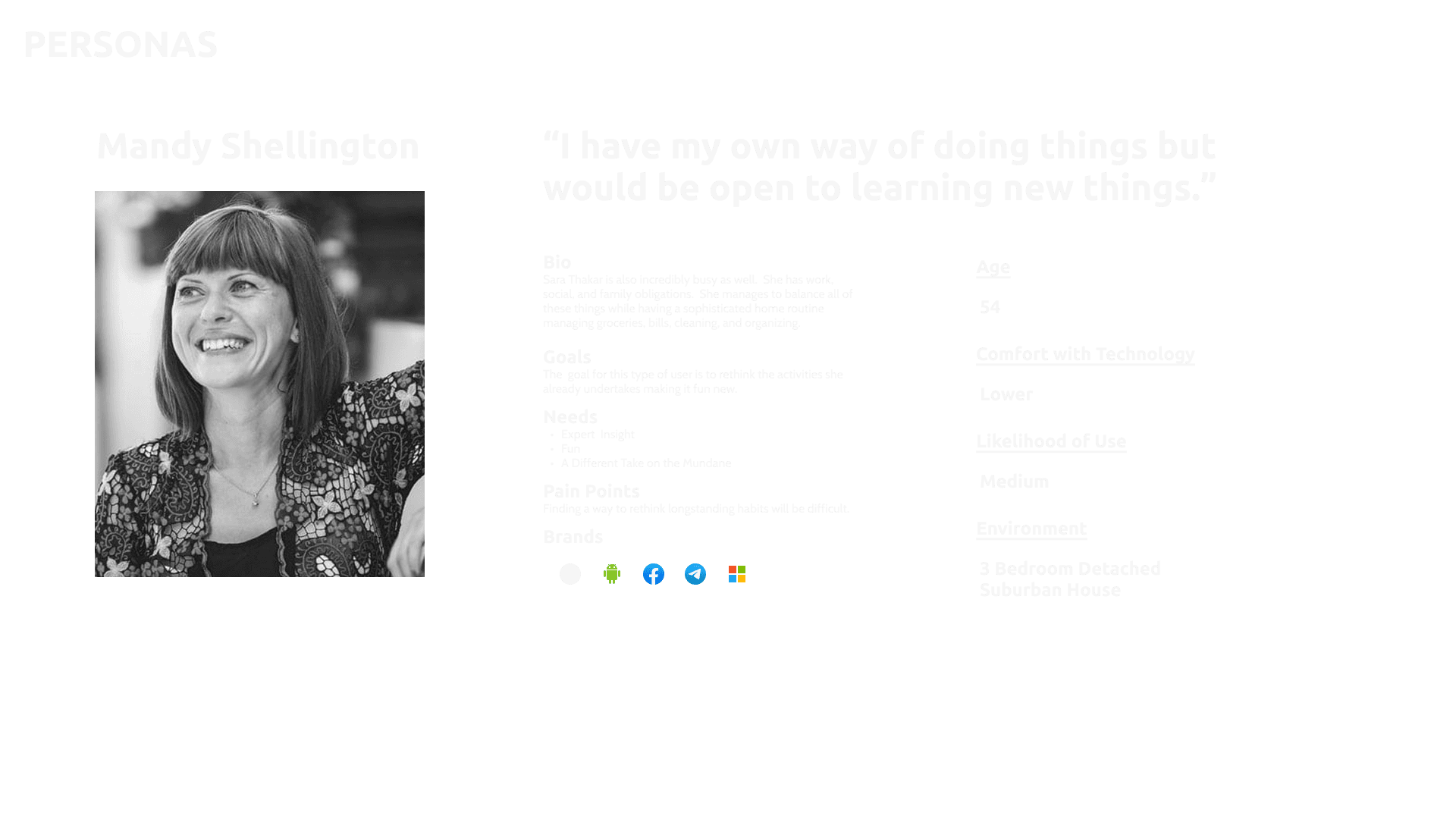
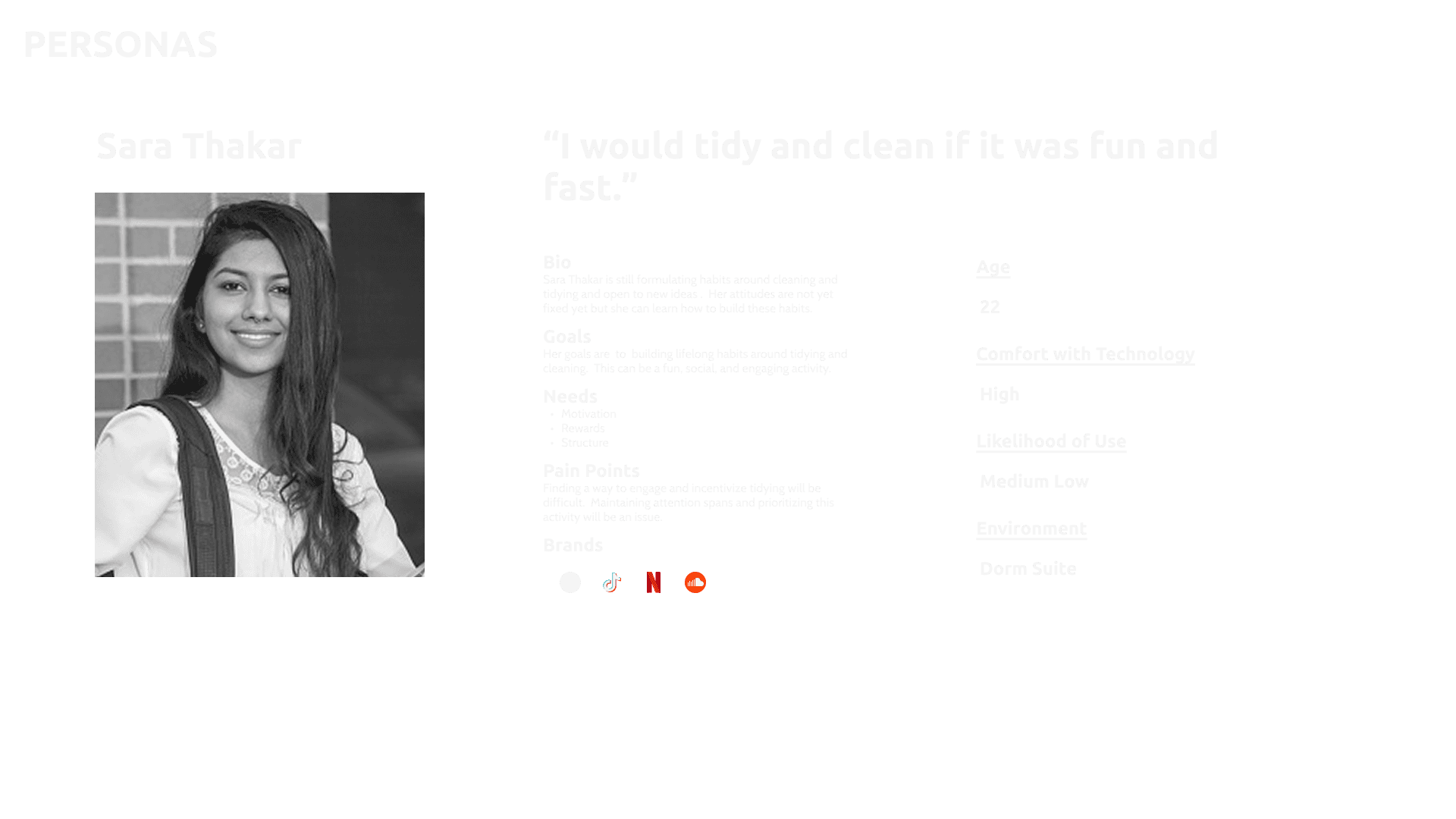
After gathering and understanding user needs we created archetypal user personas to embody our discoveries. Three types of archetypal users that embody the overarching needs we determined:

After gathering and understanding user needs we created archetypal user personas to embody our discoveries. Three types of archetypal users that embody the overarching needs we determined:

Develop

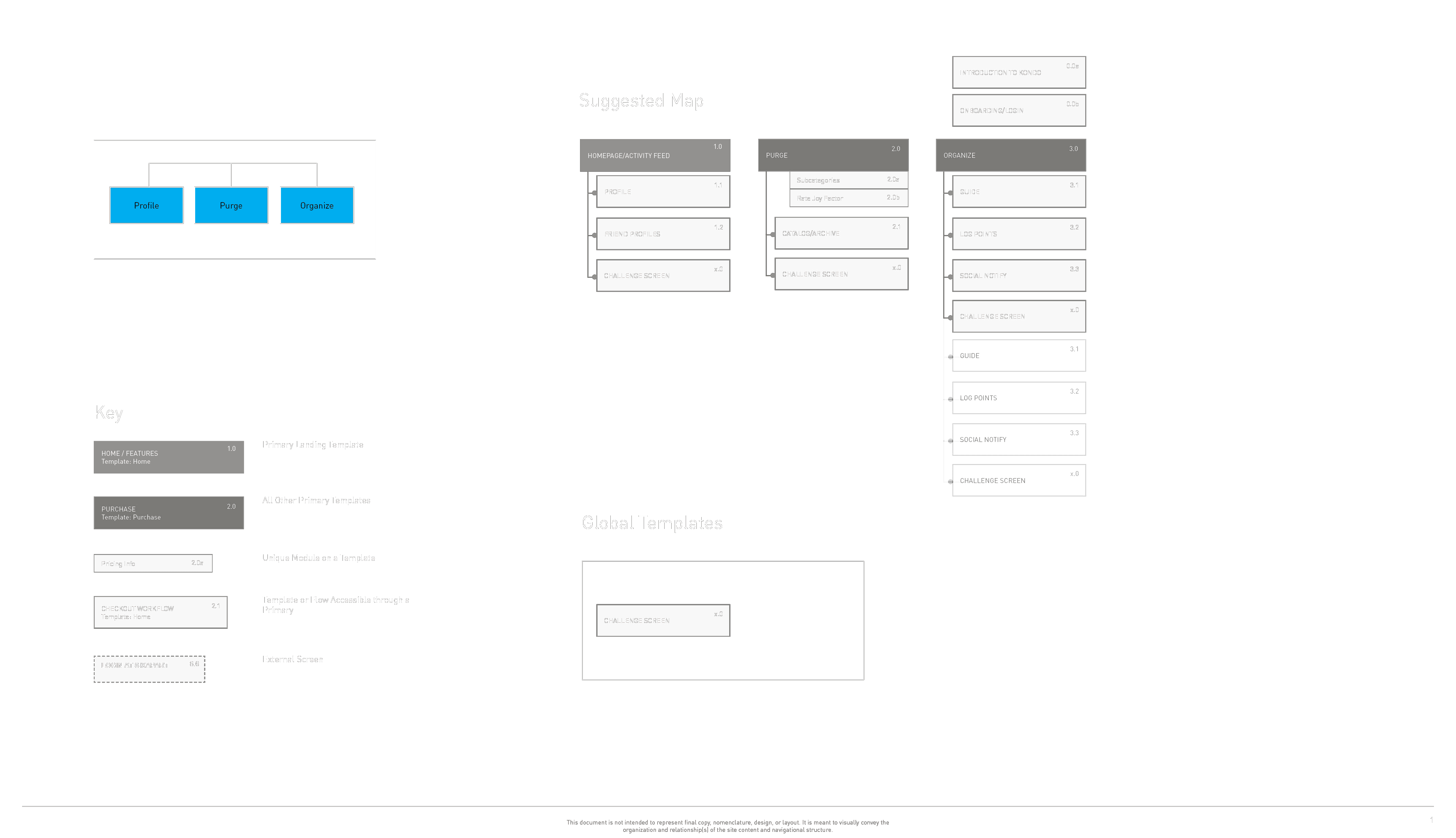
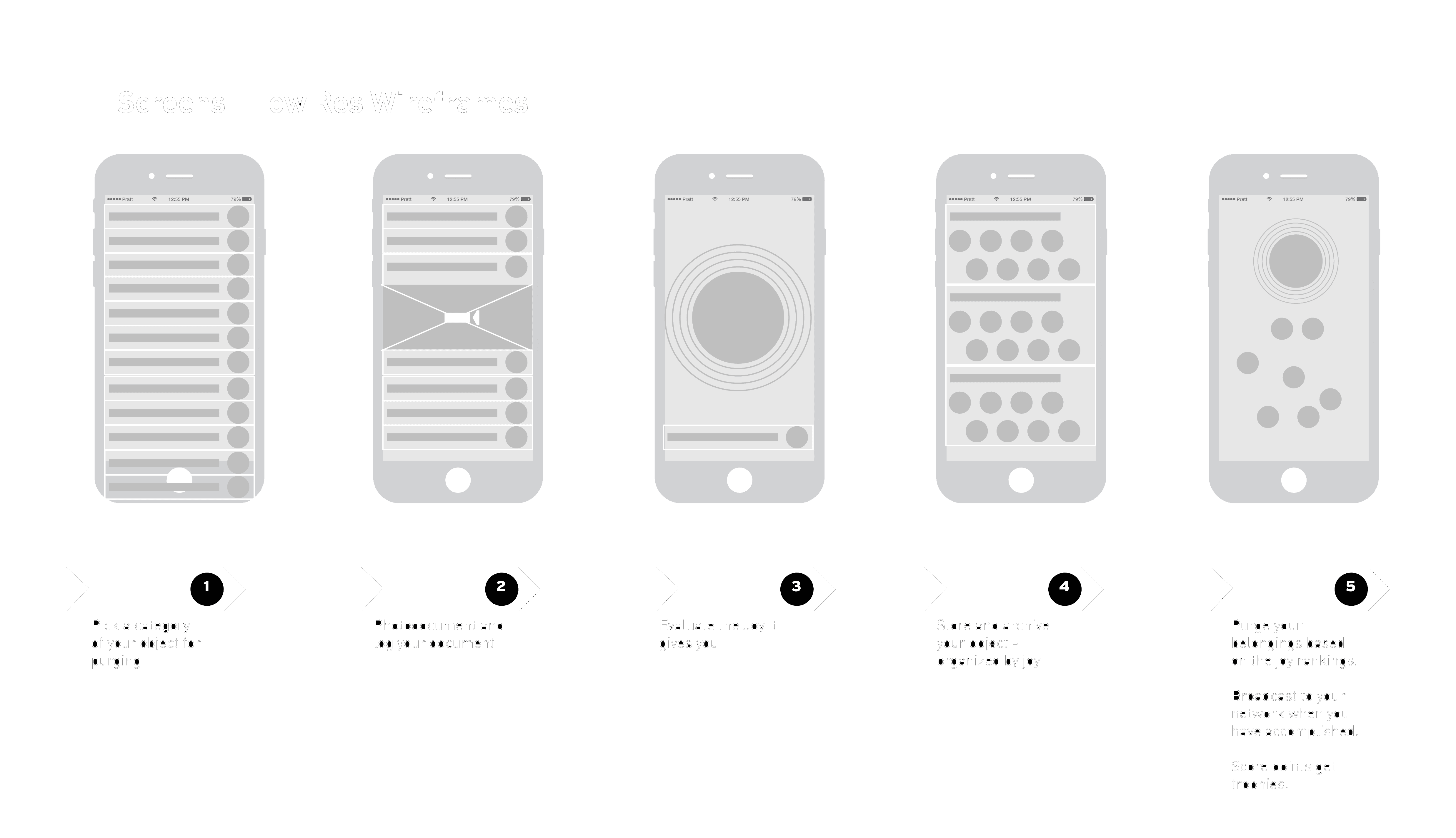
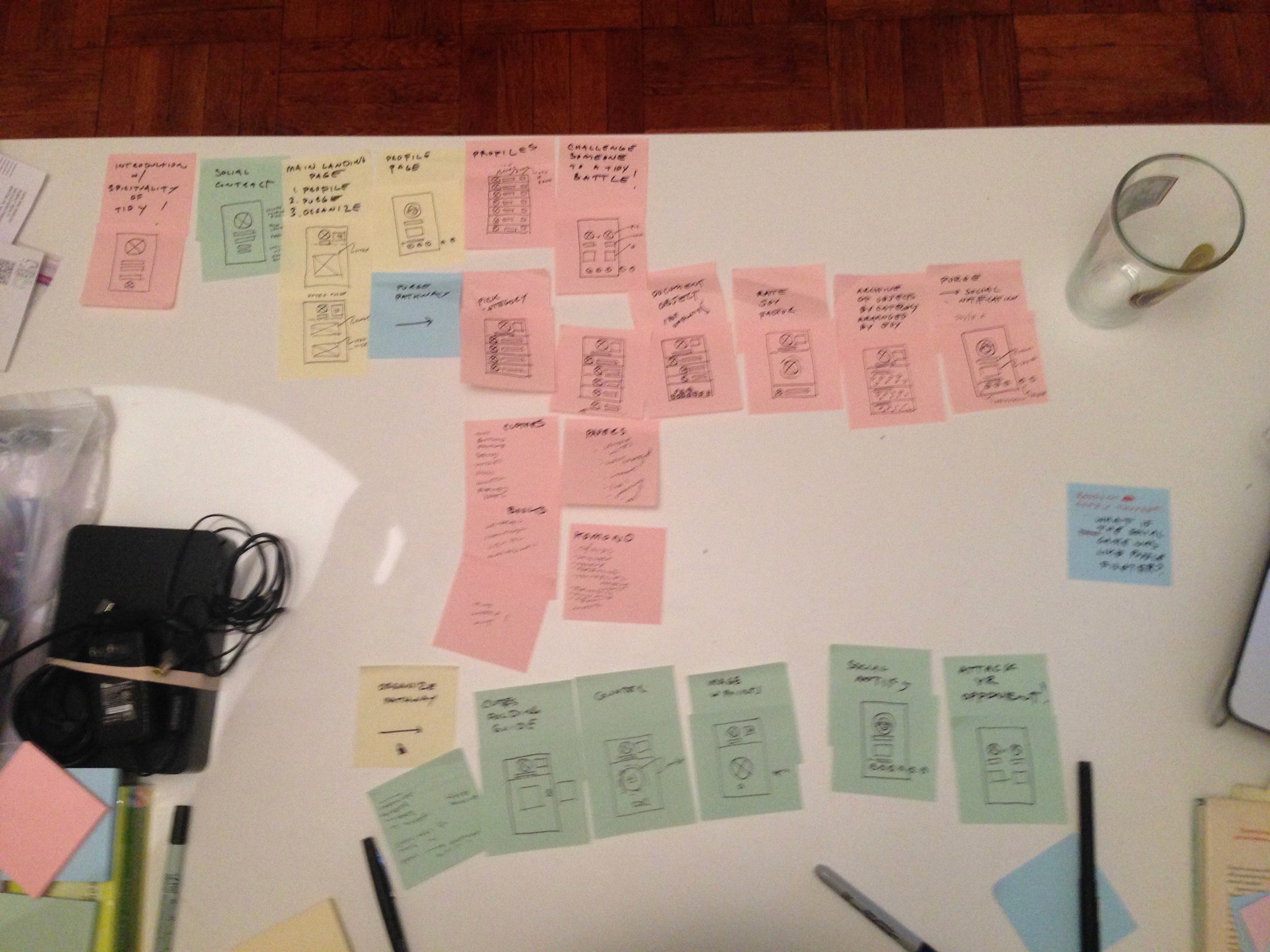
The structure of the app should be simple and straightforward.

Develop

The structure of the app should be simple and straightforward.

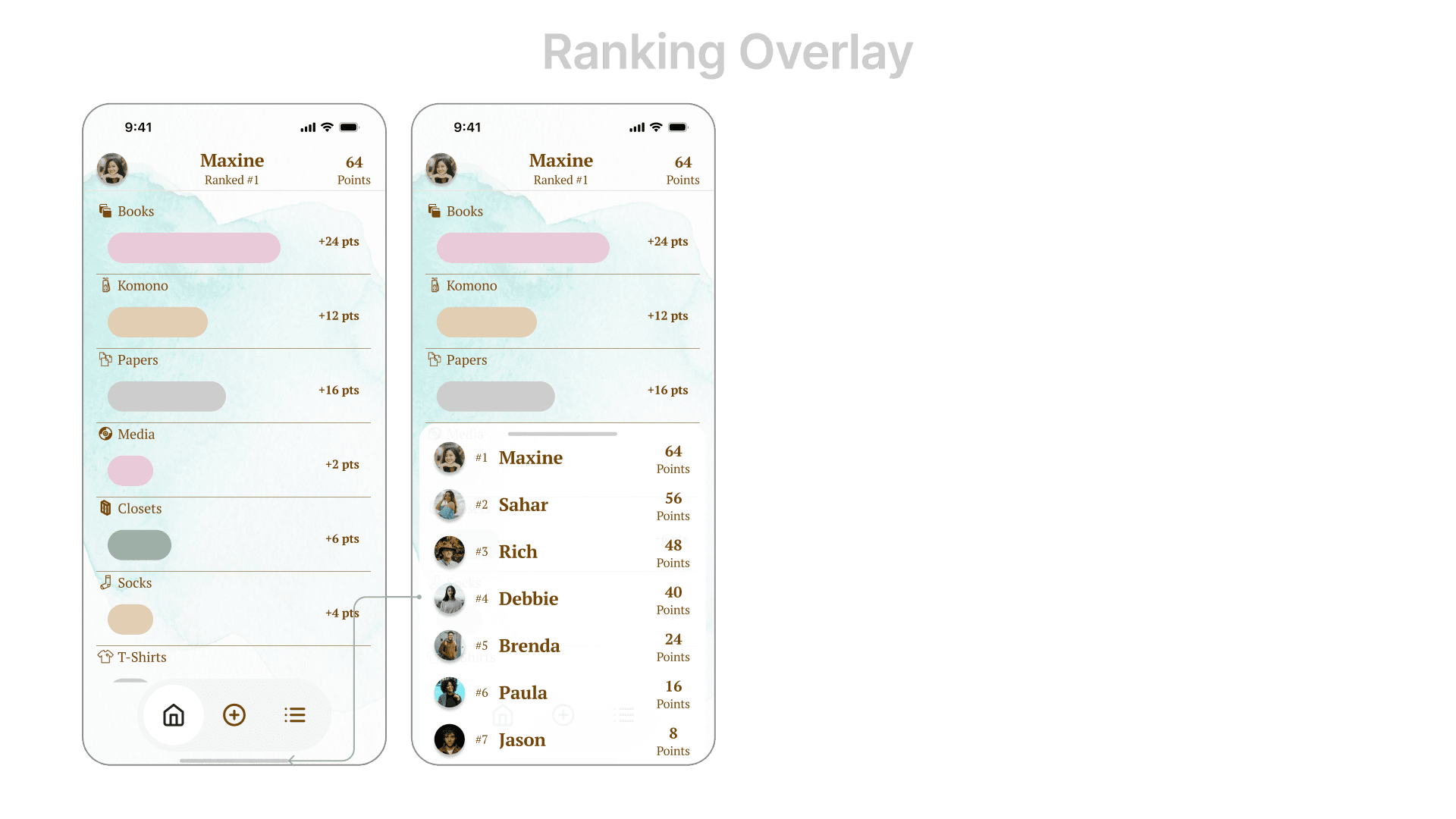
The sitemap is intended to be simple with a profile, social feed, and lesson. Social ranking is an overlay that can be pulled from any page.

The sitemap is intended to be simple with a profile, social feed, and lesson. Social ranking is an overlay that can be pulled from any page.

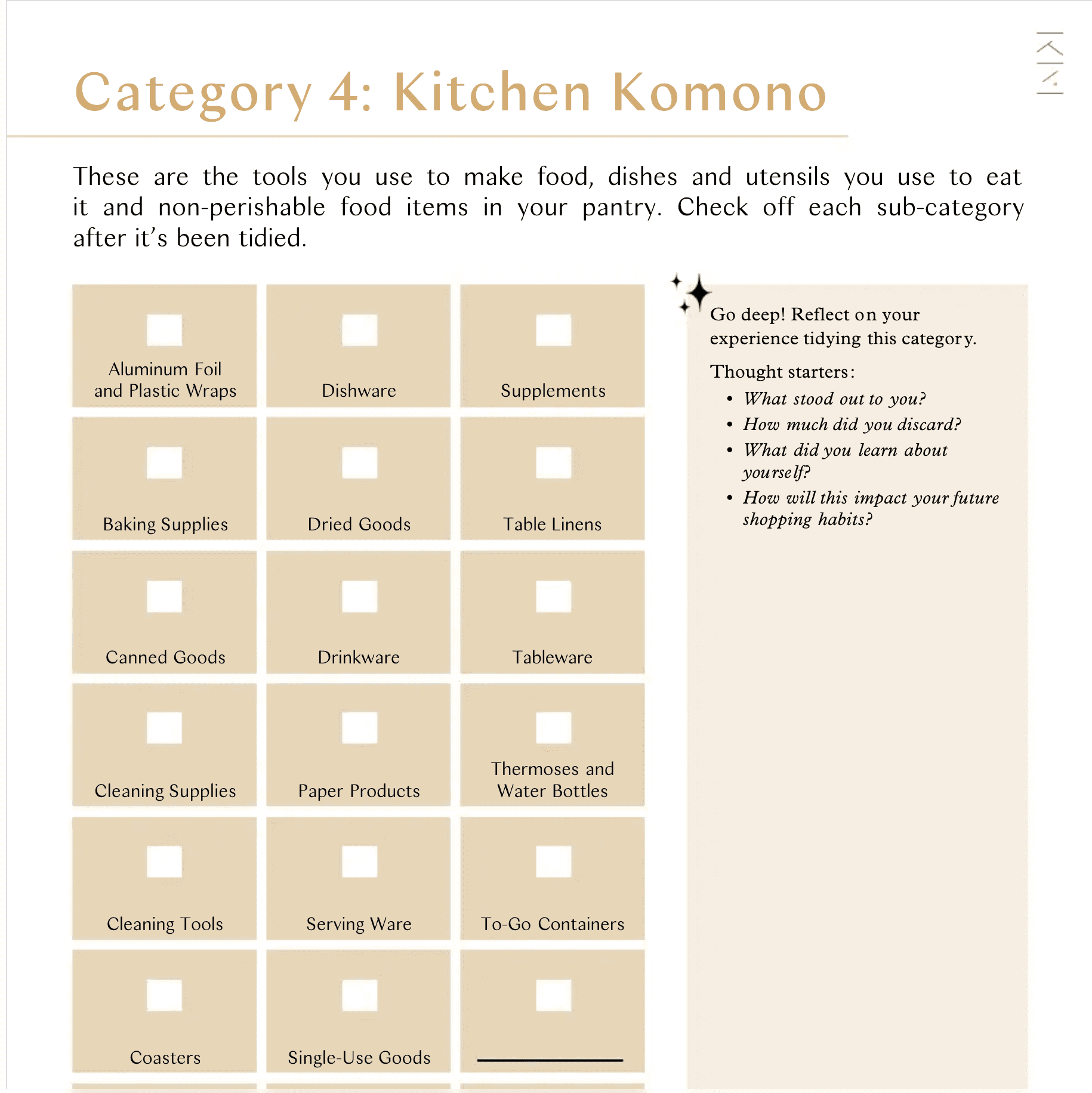
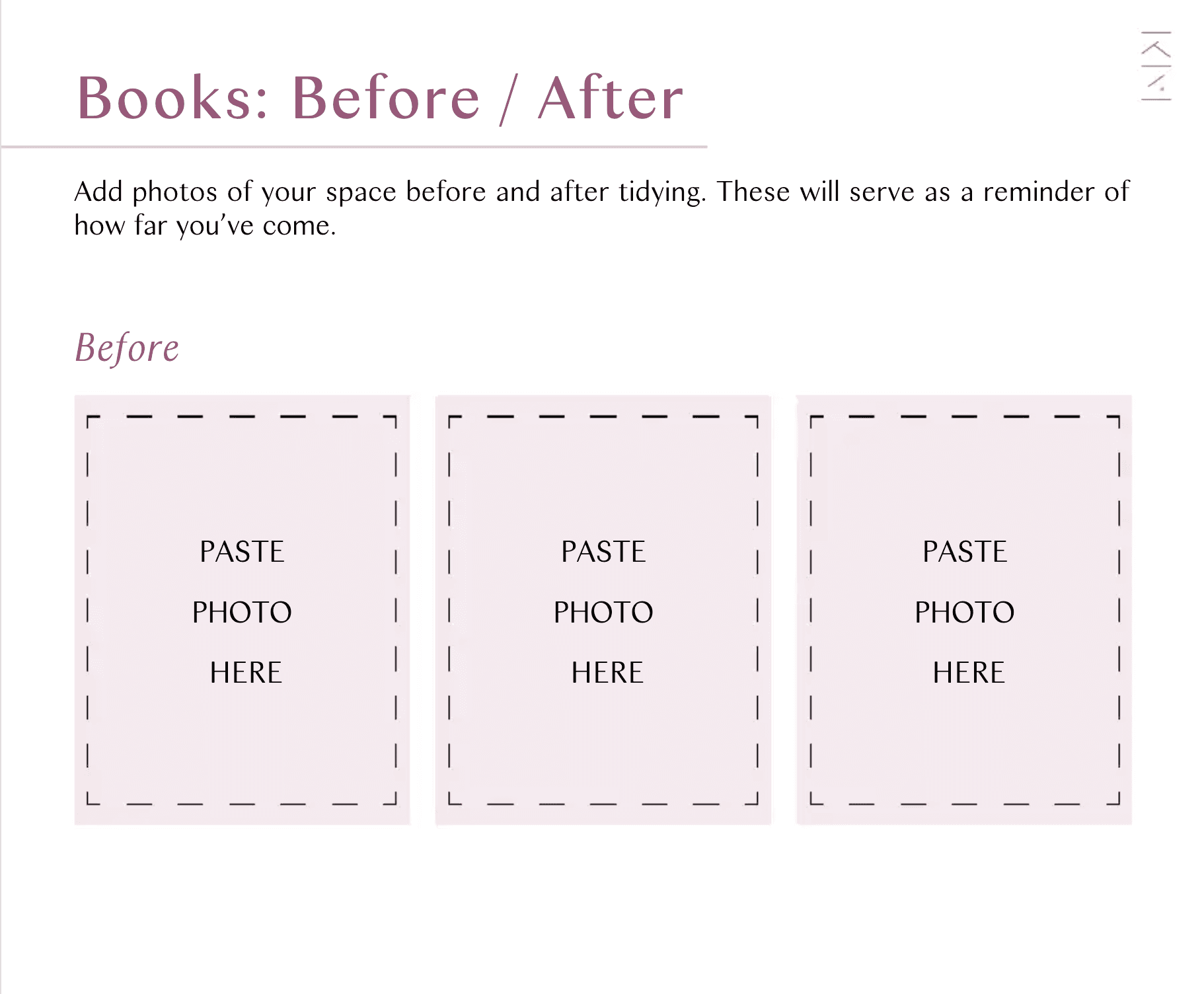
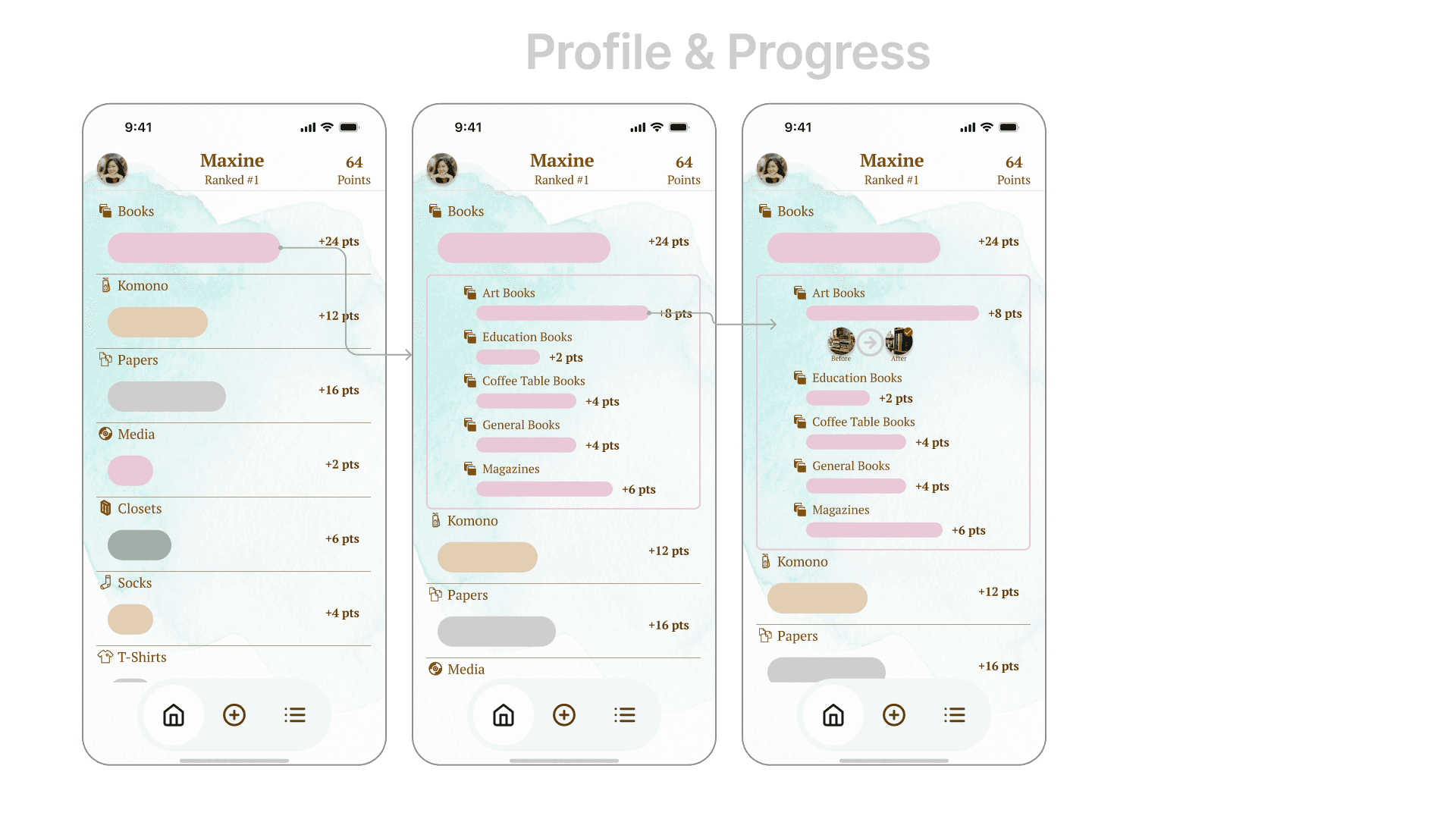
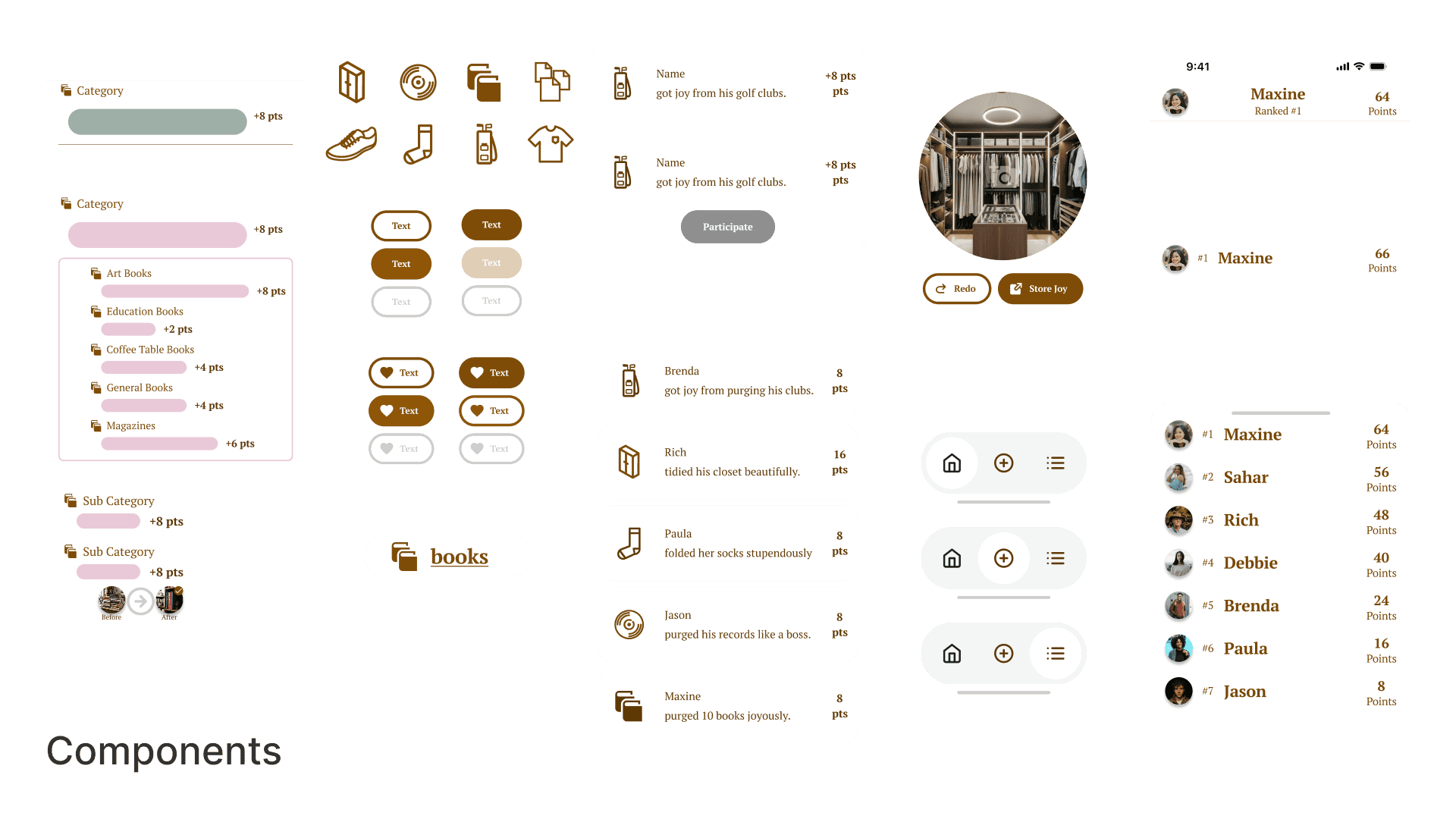
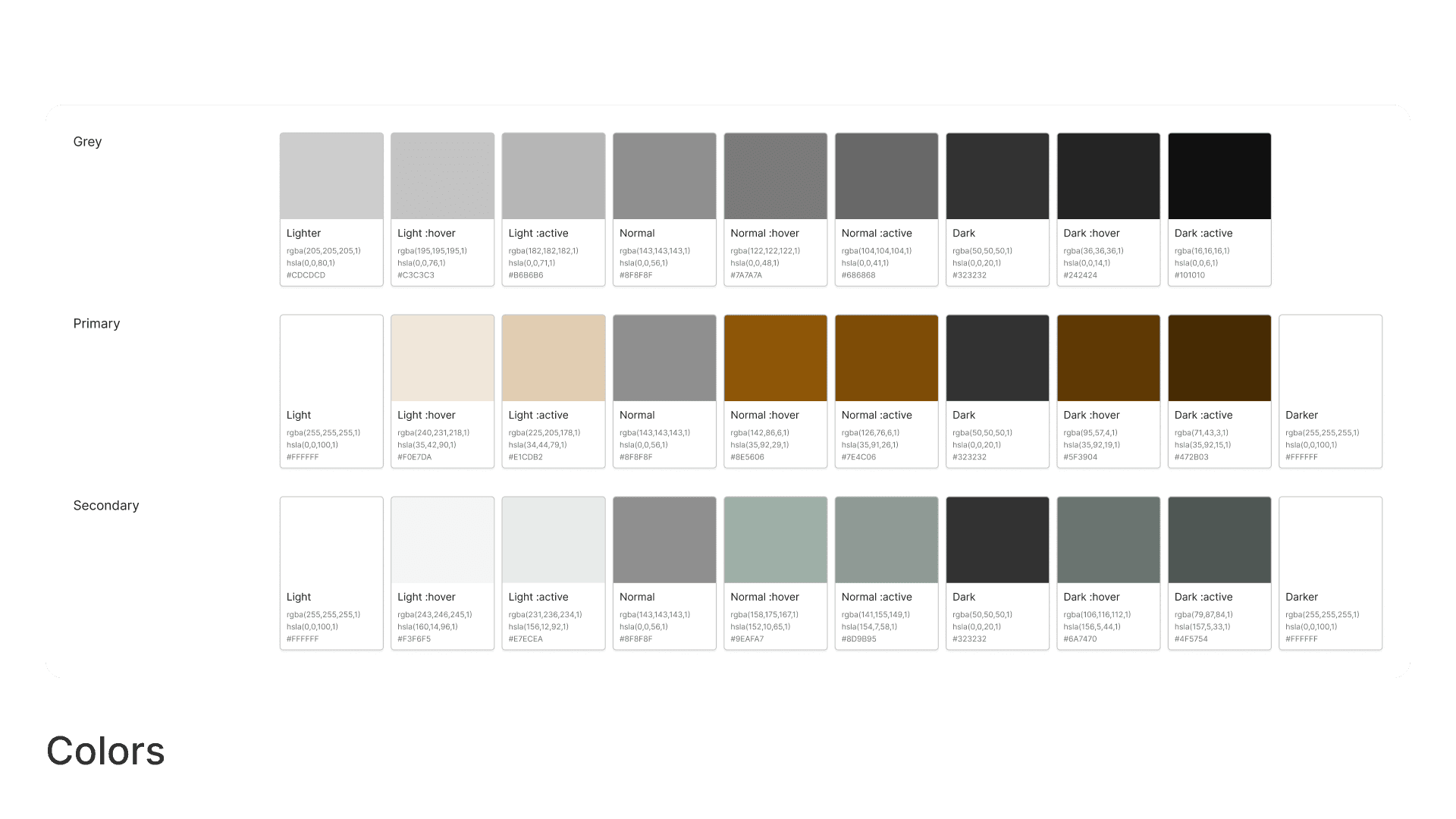
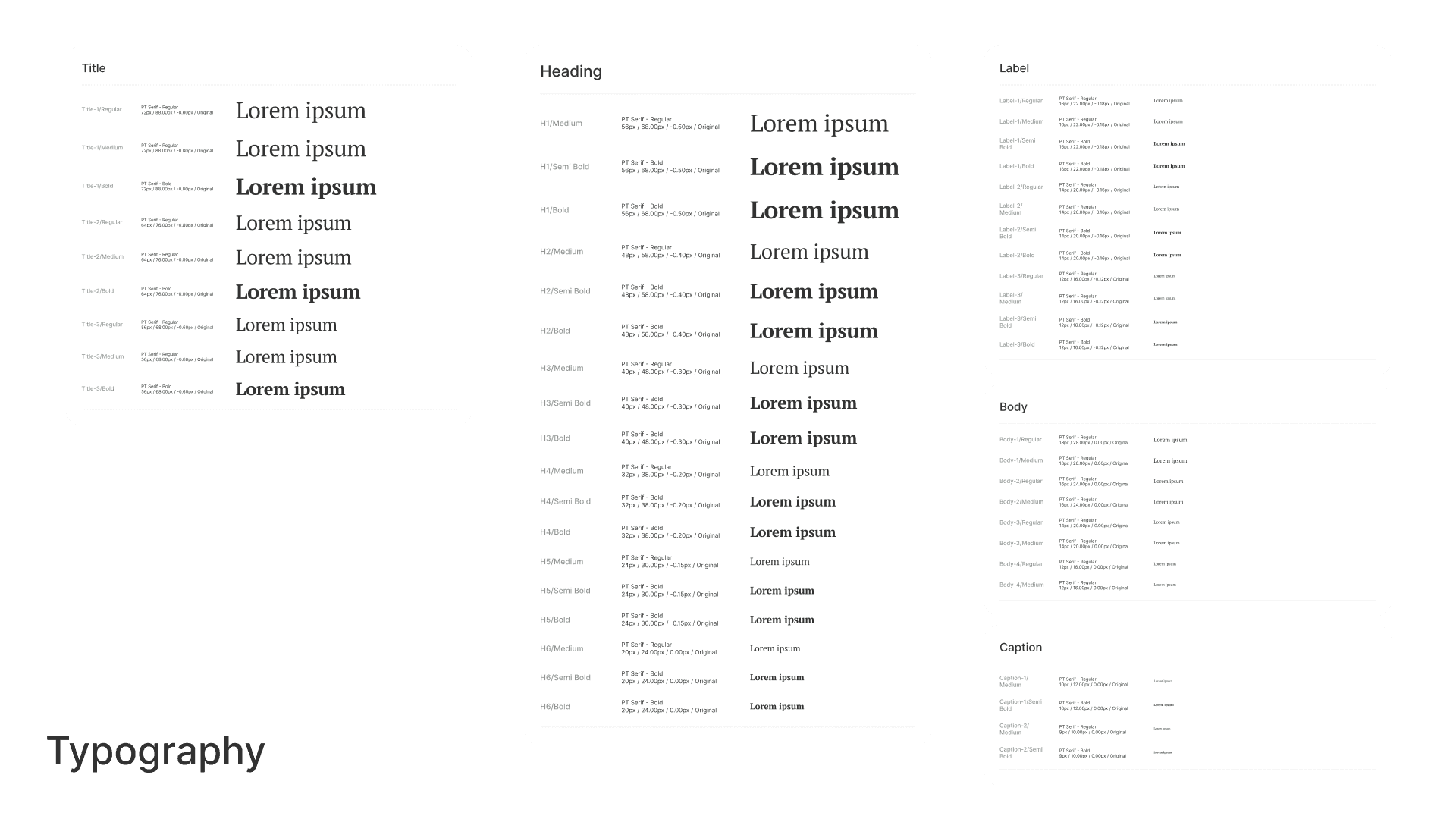
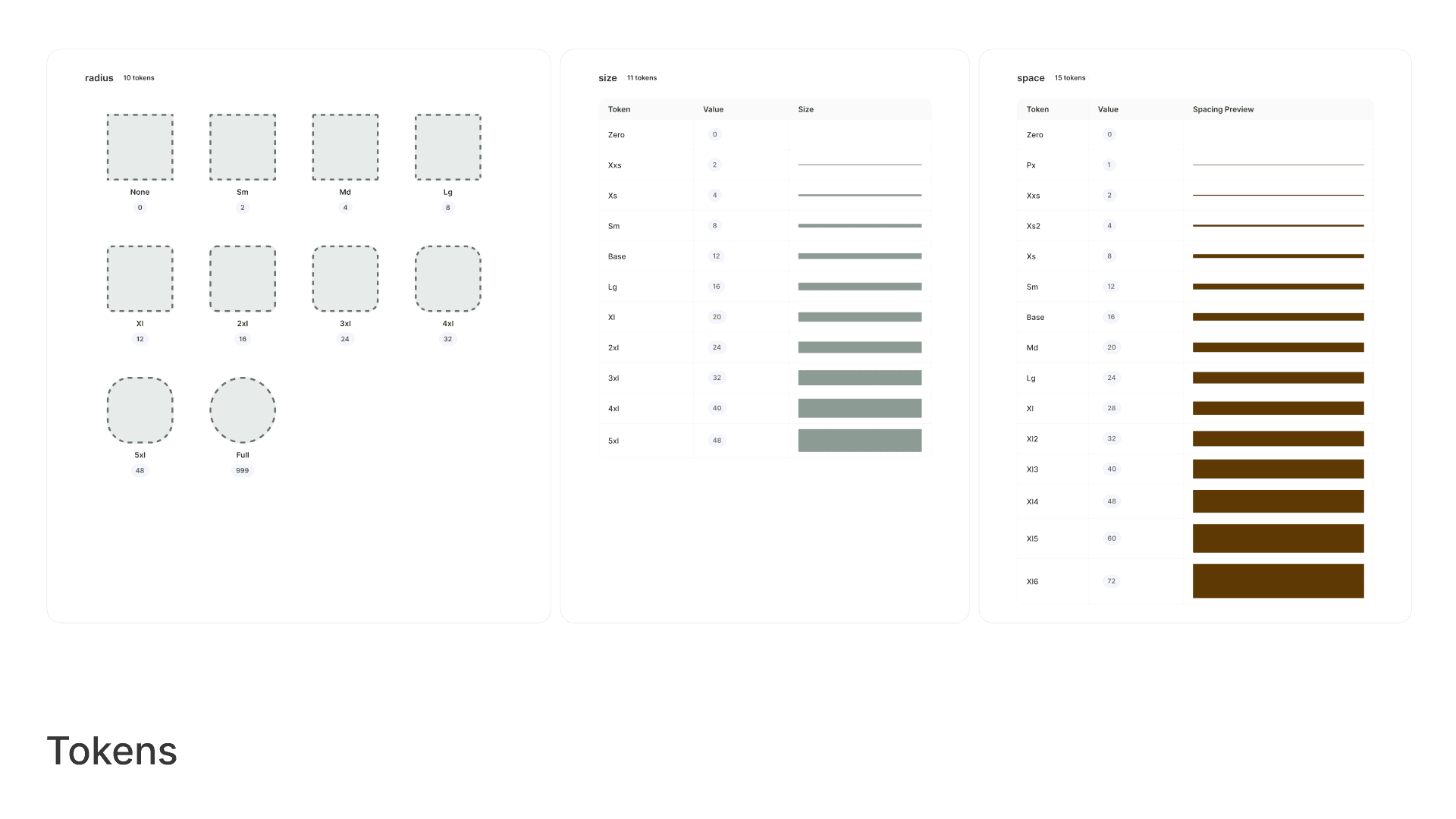
The branding and UI elements are building off of the Marie Kondo brand and the art direction of the book. The color palette, fonts, and background (a green watercolor) are all derived from the established direction. Beyond, these elements pastel colors have been pulled from the workbooks which also drove the design of the metric categories. Space, simplicity, clean, and calm are a driving ethos as well.

The branding and UI elements are building off of the Marie Kondo brand and the art direction of the book. The color palette, fonts, and background (a green watercolor) are all derived from the established direction. Beyond, these elements pastel colors have been pulled from the workbooks which also drove the design of the metric categories. Space, simplicity, clean, and calm are a driving ethos as well.

Deliver

The culmination of the iterations and research is embodied in the Deliver phase. User testing is a testing ground for the ideas proposed and a way to see if we are doing what we actually say we are doing. Also, we can find unanticipated, unrelated basic issues. We can gather the findings and package it in this final iteration.

Deliver

The culmination of the iterations and research is embodied in the Deliver phase. User testing is a testing ground for the ideas proposed and a way to see if we are doing what we actually say we are doing. Also, we can find unanticipated, unrelated basic issues. We can gather the findings and package it in this final iteration.

The concept of building community with Marie Kondo's ideas and vision has potential to be great. By gently reminding people that they are responsible for their own tidying by visual/community reminders, a framework has been made to help people progress. Perhaps in the future there is more than can be explored with this community in mind.

Next steps might involve seeing if the hypothesis does play out - does social accountability encourage tidying and organization? Though there are efforts to avoid the pitfalls of social platforms with positivity does it avoid giving its users FOMO and anxiety?